Industrial exhaust gas is one of the main causes of air pollution and affects human health and living environments. Controlling and treating exhaust gas plays an important role in reducing harm to the environment, and it is also our responsibility and mission. At Biwase E.T.S, we apply many advanced treatment methods to limit the impact of exhaust gas and protect the environment.
- Exhaust gas from landfills
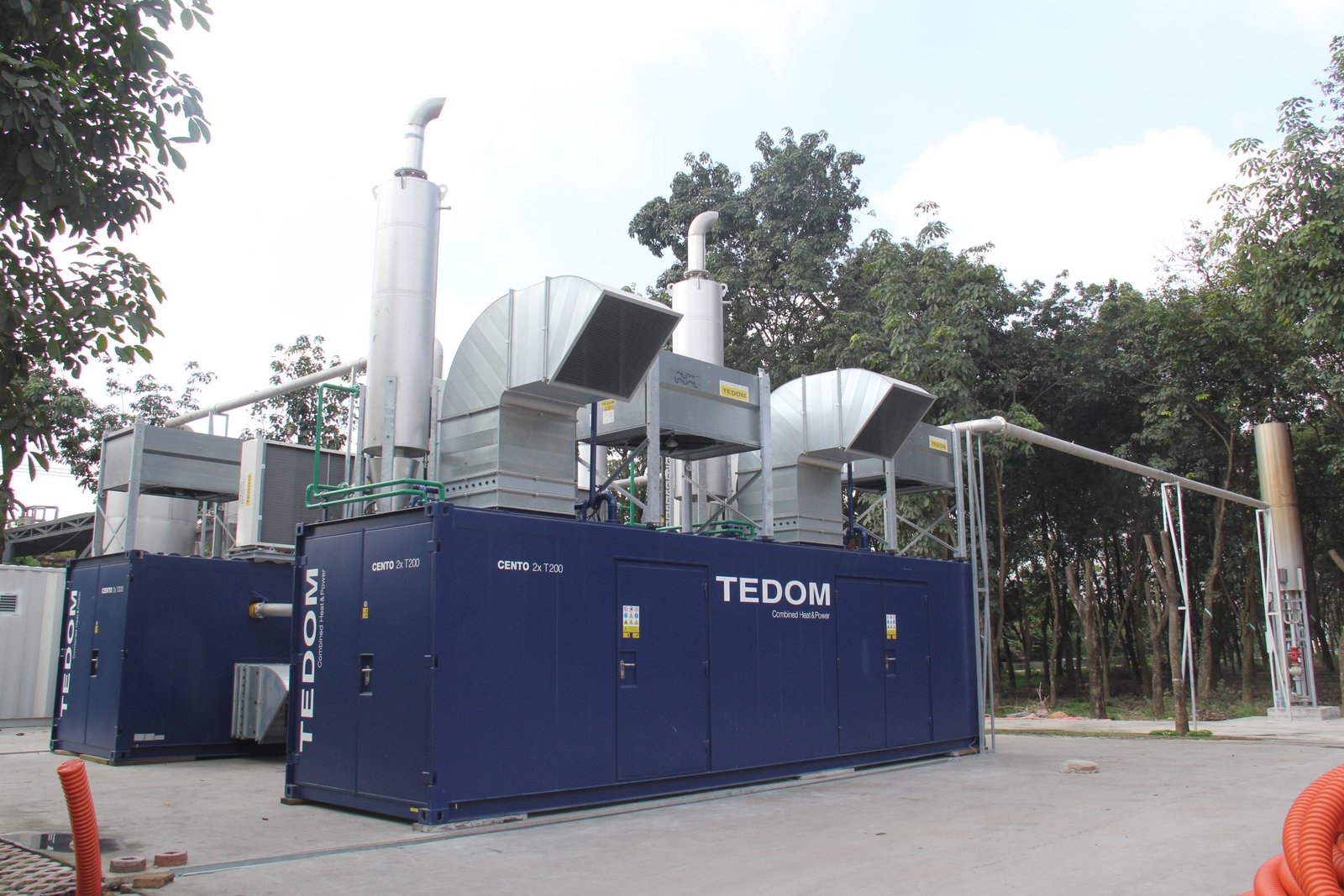
All landfills at Biwase E.T.S are currently equipped with PE pipeline systems that collect exhaust gas and odors (biogas) generated in the landfill cells and carry them to a treatment system before they are supplied to 4 generator units with a total capacity of 1,600 KVA. In addition, biological products are sprayed periodically to reduce odors at the landfill cells.
- Dust and exhaust gas treatment from compost production
We own 4 compost production plants with a total capacity of 2,520 tonnes/day. At each plant, PE sheets are installed to cover the composting tanks to reduce dust, and pipeline systems are installed to spray biological products to reduce odors released into the surrounding environment. In addition, misting systems are installed at the composting tanks to reduce dust and speed up fermentation. Cyclone dust filters are also installed to reduce dust generated in the grinding and screening area of the compost refining stage.
We have also invested in pipeline systems that collect gas from the aerobic composting houses of the compost plants for treatment.
- Dust and exhaust gas from the tunnel brick kiln with a capacity of 100,000 bricks/day
The fuel for this kiln is biogas from the landfill, so no treatment system is installed for it. The exhaust gas generated is released through a chimney 0.3m in diameter and 15m high.
- Exhaust gas from the fluorescent lamp treatment system
Lamp treatment system with a capacity of 4.8 tonnes/day: the exhaust gas passes through a fabric bag dust filter and an activated carbon absorption tower, and finally through the exhaust chimney (0.4m in diameter; 8m high).
- Volatile organic compounds from packaging and drum cleaning
After cleaning, the solvent is sent to a distillation system, where it is recovered for treatment.
- Exhaust gas from the battery dismantling system
Acid vapor generated during battery dismantling is carried off and absorbed with a caustic soda solution.
- Exhaust gas treatment system of the 5 MW waste-to-energy incinerator
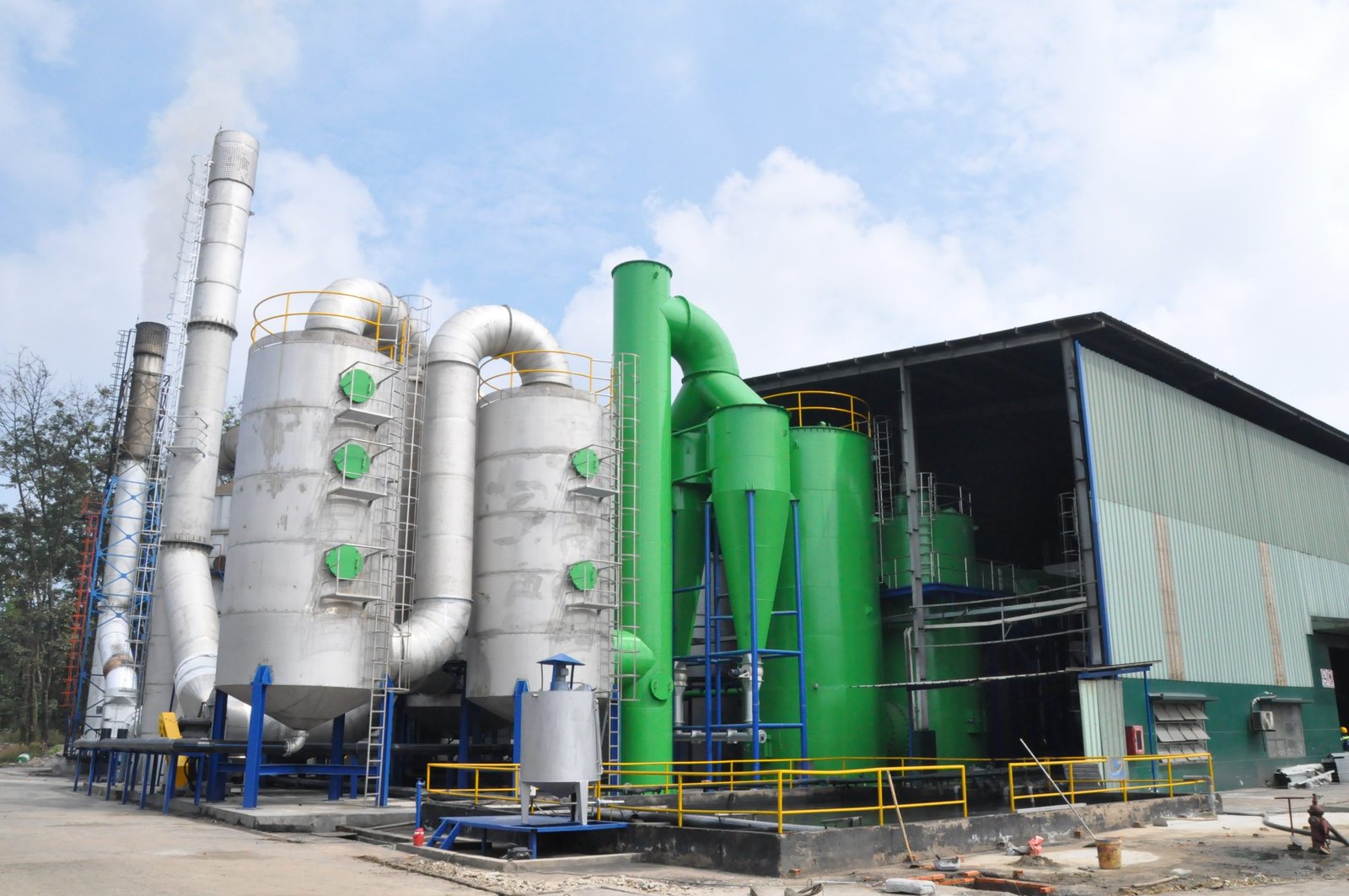
The incinerator’s exhaust gas passes through retention towers combined with SNR denitrification technology, then through a water cooling tower and a Cyclone dust filter. The process continues through a Venturi dust treatment tower and a NaOH absorption tower, then through an activated carbon absorption tower and moisture separation, after which the exhaust gas is drawn by an exhaust fan and released through the chimney (2.2m in diameter; 36m high). Before being released into the environment, this exhaust gas passes through an automatic environmental monitoring system controlled and managed by the Ministry of Natural Resources and Environment.
Công ty TNHH Một thành viên Liên hợp Khoa học – Công nghệ – Môi trường Biwase provides effective and sustainable waste treatment solutions. With advanced technology, we are committed to protecting the environment and treating waste safely.